Fixed movement
Knight moves 1, Horseman moves 2, Cannon moves 1. Movement is not dice-based, enabling planning and formations.
Board Game · Design Case Study
A team-based tactical board game focused on positional strategy (fixed movement) with dice-driven combat, plus resource cards that only activate on a roll of six.
Note: Links above expect you to place the PDFs in assets/docs/ with the same filenames.
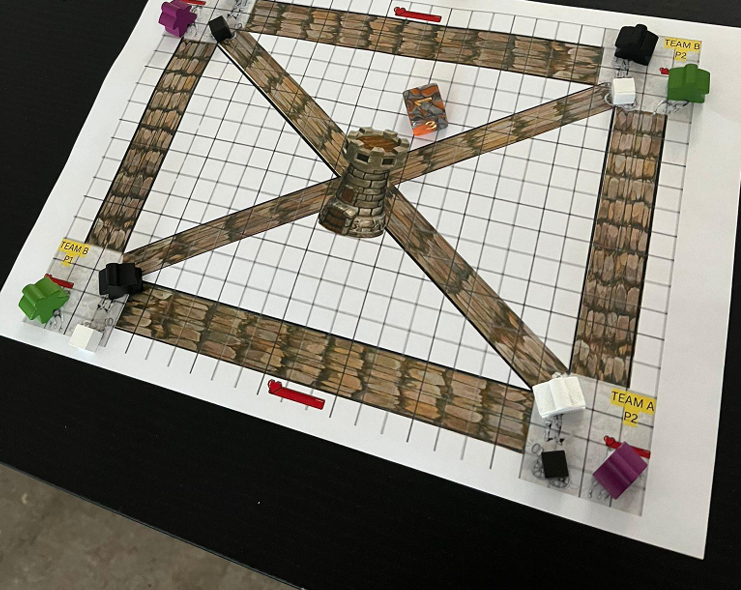
The win condition is simple: capture both enemy bases by reducing their HP to 0. The depth comes from coordinated team movement, dice-based damage output, and timing resource cards that only unlock on a six.
Why this design exists.
Movement is fixed (planning-first), but combat still has suspense via dice-based damage.
Shared resource cards and role specialization create real coordination, not just “multiplayer”.
One action per turn reduces downtime and keeps both teams engaged between turns.
The design rules I used to make decisions.
Units have pre-determined movement so strategy relies on choices, not movement RNG.
Dice determines attack intensity, creating risk management without removing counterplay.
Resource cards are powerful but gated behind rolling a six, encouraging careful timing.
How the game actually plays.
Knight moves 1, Horseman moves 2, Cannon moves 1. Movement is not dice-based, enabling planning and formations.
Dice are rolled for attacks (damage output) and to unlock resource-card usage (only on a six).
Win by capturing both enemy bases—reduce base HP to 0 and take control.
Each team starts with a set of cards. If you roll a six, you gain one extra move and may activate a card that applies to the next move or attack.
A secondary objective with strong tactical advantages. The tower has 15 HP and automatically attacks enemy units within 2 spaces at the end of each turn. Hold it for two consecutive turns to draw a free resource card.
The tower is optional for victory, but it reshapes decisions by creating a strong mid-map incentive.
What changed and why.
A clear “how a player experiences the game” flow you can also export as a PDF.
Split into two teams. Place bases and units. Each team receives its starting resource card set.
Teams coordinate early positioning—horseman pressures lanes, cannon supports, knight anchors defense.
Players choose: race for base pressure or contest the Central Tower for tactical advantage and card gain.
Attack rolls determine damage output. Teams weigh risk, probability, and unit matchup modifiers.
Rolling a six creates swing turns: extra move + optional card activation. Teams decide whether to spend or save.
Push to finish: focus fire on base HP, protect key units, and time resource cards to secure the second capture.
If you want a downloadable version, create a PDF called Fortress-Conquest-User-Journey.pdf and place it in assets/docs/. Then replace the link below.